What to Do When Kids Won't Pay Attention in Sunday School Class
Many Sunday School teachers love sharing God's Word with children, but keeping kids focused and engaged can sometimes feel challenging.
One child is talking to a friend. Another is looking around the room. Someone else is playing with their shoes instead of listening to the lesson.
If you've experienced this, you're not alone.
The good news is that a few simple adjustments can make a big difference. With the right strategies, you can create a classroom environment where children are excited to participate and learn about Jesus.
Struggling to Keep Kids Focused?
Discover ready-to-teach Bible lessons packed with discussion questions, games, crafts, and hands-on activities that help children stay engaged from start to finish.
Why Kids Lose Focus During Sunday School
Children are naturally active and curious. Sitting still and listening for long periods can be difficult, especially after a busy week at school or an energetic morning.
Sometimes children lose focus because lessons are too long, transitions take too much time, or they are not given opportunities to participate.
The goal isn't to have a perfectly quiet classroom. The goal is to keep children engaged and connected to the Bible lesson.
What to Do When You've Already Lost Their Attention
Sometimes the lesson is going well, and then suddenly the room becomes noisy.
Children start talking to each other, looking around the room, or focusing on anything except the Bible lesson.
When this happens, avoid raising your voice or trying to talk over the class. Instead, pause and use a simple attention reset.
Here are a few techniques many Sunday School teachers find helpful:
Use a Call-and-Response
Choose a phrase that signals children to stop and listen.
Examples:
Teacher: "God is good!"
Children: "All the time!"
Teacher: "1, 2, 3, eyes on me."
Children: "1, 2, eyes on you."
Practice it regularly so children know exactly what to do.
Lower Your Voice Instead of Raising It
Many teachers naturally raise their voice when children become noisy.
Try the opposite.
Lower your voice and continue speaking calmly. Children often become curious and naturally quiet down so they can hear what you're saying.
Ask an Unexpected Question
Questions instantly refocus attention.
Try asking:
"Who remembers what Noah built?"
"What would you do if you were Jonah?"
"Can anyone guess what happens next?"
Children love being involved and will often re-engage quickly.
Add a Quick Movement Break
Sometimes children simply need to move.
Try:
Stand up if you've ever seen a rainbow.
Show me your strongest Noah hammer motion.
Let's do our memory verse actions together.
A one-minute movement break can completely reset the room.
Use a Visual Object
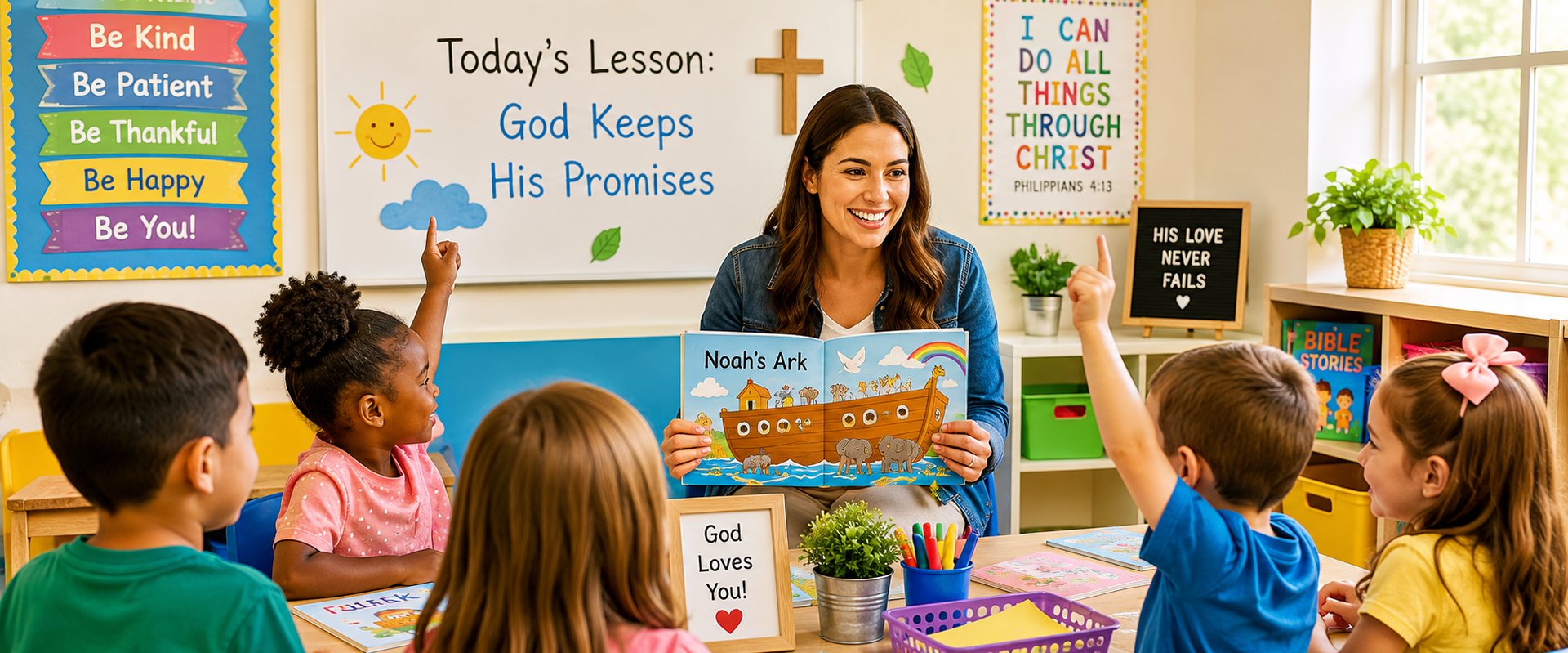
Hold up a picture, object, or craft sample related to the lesson.
Children are naturally drawn to something they can see and touch.
A visual often works faster than repeating instructions.
Remember, losing children's attention does not mean you're failing as a teacher. Every Sunday School class experiences moments of distraction. The key is having a few simple tools ready to help children refocus and reconnect with the lesson.
Once you've regained their attention, the next challenge is keeping children engaged throughout the rest of your Sunday School class.
The good news is that a few simple teaching habits can prevent many attention problems before they start.
Here are seven practical ways to keep children focused, involved, and excited about learning God's Word.
1. Start With an Attention Grabber
The first few minutes of class often determine how engaged children will be throughout the lesson.
Try starting with:
A mystery object
A surprising question
A visual prop
A simple challenge
For example:
"Can anyone guess what Bible story this toy boat reminds me of?"
Curiosity helps children focus right from the start.
2. Keep Teaching Segments Short
Children learn best when information is presented in small pieces.
Instead of teaching for twenty minutes straight, break your lesson into shorter sections.
For example:
Bible story
Discussion question
Quick activity
Continue lesson
Changing activities every few minutes helps keep attention levels high.
3. Let Children Participate
Kids learn more when they are actively involved.
Look for opportunities to include them throughout the lesson.
Examples:
Act out Bible stories
Read simple Bible verses aloud
Answer discussion questions
Hold lesson props
The more involved children are, the more likely they are to stay focused.
4. Use Movement Throughout the Lesson
Movement should not only be used when attention is lost.
Building movement into the lesson helps prevent attention problems before they start.
Try:
Memory verse motions
Bible story actions
Stand-and-answer activities
Partner discussions
Children often learn better when their bodies are involved.
5. Prepare Materials Before Class
Long transitions create opportunities for distractions.
Before class begins, organize all supplies and lesson materials.
For example, place craft supplies in small baskets before children arrive instead of passing out materials one item at a time.
This keeps the lesson moving smoothly and reduces opportunities for children to lose focus.
6. Use Visuals Whenever Possible
Children often remember what they see better than what they hear.
Visuals can help bring Bible stories to life.
Consider using:
Bible story pictures
Object lessons
Crafts
Visual timelines
Printable activities
Visual learning helps children stay engaged and remember important truths.
7. End With a Hands-On Activity
Children love opportunities to create and participate.
A hands-on activity helps reinforce the lesson while giving children an enjoyable way to respond to what they learned.
Ideas include:
Crafts
Review games
Memory verse activities
Faith challenges
Children often remember these activities long after class is over.
A Little Encouragement for Sunday School Teachers
Remember, children do not need a perfect teacher.
They need someone who loves Jesus, prepares faithfully, and is willing to teach with patience and kindness.
Some Sundays will feel easier than others, and that's okay.
The seeds you plant through God's Word matter more than you may realize. Even when children seem distracted, God is still at work in their hearts.
Make Sunday School Preparation Easier
Using ready-to-teach lessons can also help reduce stress and make class time feel more organized and enjoyable.
When lessons include discussion questions, crafts, activities, and clear teaching plans, it becomes much easier to keep children engaged from beginning to end.
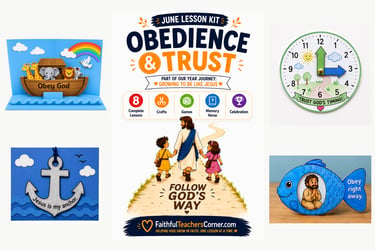
Our monthly Ready-to-Teach Bible Lesson Kits were created to help busy teachers save time and walk into class prepared and confident.
Each lesson includes a complete Bible lesson, discussion questions, a craft, a game, memory verse activities, and teacher resources designed to help children stay engaged while learning God's Word.
Ready to Teach With Confidence?
Explore our Ready-to-Teach Bible Lesson Kits designed for children ages 3–10.
✔ Complete Bible lessons
✔ Crafts and activities
✔ Discussion questions
✔ Memory verse resources
✔ Teacher-friendly planning tools
✔ A fun activity in every lesson
More Ways to Help Kids Grow in Faith