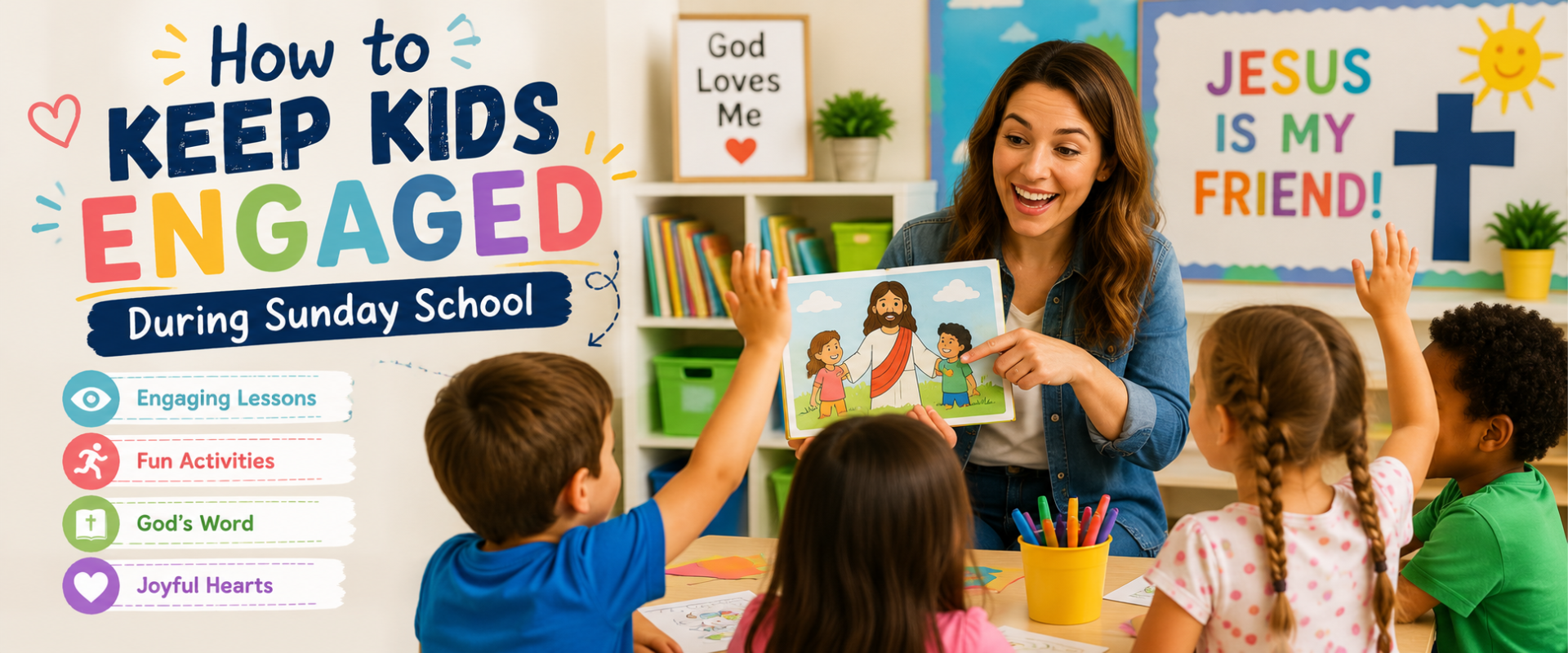
How to Keep Kids Engaged During Sunday School
Teaching children about Jesus is one of the most meaningful parts of children’s ministry—but keeping kids focused and engaged during Sunday School can sometimes feel overwhelming, especially in mixed-age classrooms. Many teachers struggle with short attention spans, distractions, extra energy, and trying to make Bible lessons meaningful for every child.
The good news is that children do not need perfect lessons to stay engaged. They need lessons that are interactive, organized, visual, and filled with opportunities to participate. A few simple changes can completely transform the atmosphere of your Sunday School class and help children enjoy learning God’s Word.
1. Start With an Attention-Grabbing Opening
The first few minutes of class are extremely important. If children become engaged early, they are much more likely to stay focused throughout the lesson.
Instead of beginning with long explanations, try:
a fun question
a mystery object
an exciting visual
a simple game
an action activity
a short worship song with motions
For example:
If teaching about Noah’s Ark, you could start by asking:
“What animals would you bring on a giant boat?”
Questions immediately invite participation and curiosity.
2. Use Movement Throughout the Lesson
Children learn best when they are actively involved. Sitting still for long periods can make it difficult for kids to focus, especially younger children.
Simple ways to add movement:
Bible verse motions
acting out the Bible story
standing games
hand motions
moving to different stations
scavenger hunts
interactive review games
During worship time, show children simple and fun motions they can follow along with while singing. Encourage clapping, jumping, hand movements, marching, pointing upward, or acting out the song lyrics. Fun worship movements help children release energy, stay focused, and participate joyfully during praise and worship.
Movement helps children:
release energy
stay attentive
remember the lesson better
participate more confidently
enjoy Sunday School more actively
3. Keep Lessons Short and Interactive
Many teachers feel pressured to explain every detail of the Bible story. But children often learn more when lessons are simple, clear, and interactive.
Instead of long teaching sections:
ask questions often
pause for discussion
let children answer
include participation moments
Examples:
“What would you do?”
“How do you think Noah felt?”
“What can we learn from Jesus here?”
Interaction keeps children mentally involved instead of simply listening passively.
4. Use Visuals and Hands-On Activities
Visual learning is incredibly important in children’s ministry. Crafts, games, pictures, printable activities, and object lessons help children connect with the Bible story in a meaningful way.
Some easy ideas include:
coloring pages
Bible crafts
matching games
printable activities
sensory bins
memory verse cards
storytelling props
Children often remember:
what they DO
more than what they only hear.
5. Create Simple Classroom Expectations
Children feel safer and calmer when expectations are clear.
Instead of giving many rules, keep classroom expectations:
short
positive
easy to remember
Examples:
Listen when others speak
Keep hands to yourself
Be kind
Participate respectfully
Review expectations gently at the beginning of class instead of only correcting behavior later.
6. Change Activities Every Few Minutes
Young children especially struggle with long transitions or staying on one task too long.
A balanced Sunday School lesson may include:
welcome activity
Bible story
discussion
craft
game
memory verse
prayer
Changing activities helps maintain attention and excitement throughout class.
7. Make Every Child Feel Included
One of the biggest reasons children disconnect is because they feel unnoticed or left out.
Simple ways to help children feel included:
learn their names
encourage participation
celebrate small successes
allow shy children to answer gently
praise effort, not perfection
Children engage more when they feel loved, welcomed, and valued.
8. Use Different Teaching Styles to Reach Every Child
Every child learns differently, which means one teaching method may not work for every student in your Sunday School class. Some children learn best by seeing, others by listening, and some learn most effectively through movement and hands-on activities.
Using a variety of teaching styles throughout your lesson can help more children stay focused and connected to God’s Word.
Examples include:
Visual learners enjoy pictures, crafts, coloring pages, maps, and storytelling visuals.
Auditory learners learn through listening, discussions, worship songs, and hearing Bible stories read aloud.
Hands-on learners engage best with crafts, object lessons, games, and interactive activities.
Movement learners benefit from Bible verse motions, acting out stories, worship movements, and active games.
When lessons include a mix of visuals, discussion, movement, worship, crafts, and interaction, children are more likely to stay engaged and remember what they learned.
This is one reason many Sunday School teachers use activities, games, visuals, and movement throughout class instead of relying only on talking.
9. Remember That Relationship Matters Most
Children may not remember every detail of the lesson, but they will remember how your classroom made them feel.
A warm smile, patience, kindness, and encouragement can have a powerful impact on a child’s faith journey.
Teaching children about Jesus is not about creating a perfect classroom—it is about faithfully planting seeds of God’s truth in their hearts.
Helpful Tip for Busy Teachers
Using ready-to-teach Sunday School lessons can also help reduce stress and make class time feel more organized and engaging. When lessons already include crafts, games, discussion questions, and memory verse activities, teachers can spend less time searching for ideas and more time connecting with children.
Explore Ready-to-Teach Bible Lesson Kits
Our monthly Sunday School lesson kits include complete Bible lessons, crafts, games, memory verse activities, printable resources, and hands-on learning ideas designed to help busy teachers save time and walk into class prepared with confidence.