
When I Feel Angry – Free Sunday School Lesson for Kids
This Lesson is part of the God cares About My Feelings Series
Next Lesson: When I Feel Sad — God Cares about My Feelings
When I Feel Angry — God Helps Me Calm My Anger
Free Sunday School Lesson for Kids
Intro
Anger is a powerful feeling, and children often struggle to understand why it shows up or what to do when it does. Instead of hiding anger or reacting in hurtful ways, kids can learn how God helps them calm their hearts and make wise choices.
This Bible lesson helps children recognize angry feelings and respond with kindness and self-control. Through Scripture, discussion, and a visual craft activity, kids are guided toward healthy ways to handle anger and remember that God wants to help them choose love — even in hard moments.
Series: When I Feel…
Lesson Title: God Helps Me Calm My Anger
Bible Passage: James 1:19–20
Focus Point: I can be slow to anger with God’s help.
Memory Verse: “Be quick to listen, slow to speak, and slow to become angry.” — James 1:19
Teacher says:
“Everyone feels angry sometimes. Anger is a feeling God knows about — and today we’re going to learn how God helps us calm our anger and make good choices.”
Icebreaker Question:
“Can you think of something that might make a kid feel angry?”
(Allow answers like sharing toys, being told no, losing a game.)
Opening Prayer
“Dear God, thank You for loving us. Help us stay calm and gentle when we feel angry. Teach us to be slow to anger and quick to love. Amen.”
Worship Song (Choose One):
“This Little Light of Mine” (focus on shining kindness)
“Jesus Loves Me” (reminds kids they are safe and loved)
“He’s Got the Whole World in His Hands” (helps calm emotions)
2. Bible Story — God Teaches Us How to Handle Anger (James 1:19–20)
Time: 8–10 minutes
Teacher Setup (Before You Start)
Have the children sitting where they can see you. Hold up your Bible.
Teacher says:
“This is God’s Word, the Bible. The Bible helps us learn how to live and how to handle big feelings — like anger.”
Story Introduction (Kid-Friendly)
Teacher says:
“Have you ever felt so angry that you wanted to yell, stomp your feet, or say something mean?”
(Pause and let kids nod or raise hands.)
“God knows we feel angry sometimes. That’s why He gives us help in the Bible.”
Who Is James?
Teacher says:
“Our Bible story today comes from a man named James. James loved Jesus and wanted to help people learn how to live in a way that makes God happy.”
“James knew that anger can get us into trouble if we don’t slow down.”
The Bible Teaching Explained Simply
Teacher reads (or paraphrases):
‘Be quick to listen, slow to speak, and slow to become angry.’ — James 1:19
Teacher explains step by step:
1. Be Quick to Listen
Teacher says:
“Being quick to listen means we stop and listen before we react. When we’re angry, we often stop listening — but God wants us to listen first.”
Example for kids:
“If a friend takes your crayon, instead of yelling, you can listen and find out why.”
2. Be Slow to Speak
Teacher says:
“Being slow to speak means we don’t say the first thing that pops into our head when we’re mad.”
Example:
“When we speak too fast, we might say words that hurt others — and we can’t take them back.”
Teacher reminder:
“God wants our words to be kind and helpful, not hurtful.”
3. Be Slow to Become Angry
Teacher says:
“Being slow to anger means we don’t let anger control us. We pause. We breathe. We ask God for help.”
Have kids practice:
Take a slow breath in
Let it out slowly
Say together:
“I can slow down with God’s help.”
Why Is This Important? (James 1:20)
Teacher explains:
“The Bible tells us that when anger takes control, it can lead us to make wrong choices.”
Kid example:
Yelling at a friend
Hitting
Saying mean words
Slamming doors
“God wants to help us choose a better way.”
Jesus Example Connection
Teacher says:
“Jesus showed us how to handle anger the right way. People were sometimes unkind to Him, but Jesus stayed calm. He spoke with love and trusted God.”
“Jesus understands our feelings — and He helps us when we ask.”
Key Teaching Moment (Very Important)
Teacher says slowly and clearly:
“Feeling angry is not a sin. What matters is what we do after we feel angry.”
“When we stop, breathe, and pray, God helps us calm our hearts.”
Repeat the Big Truth Together
Have kids repeat after you (twice):
👉 “God helps me calm my anger.”
👉 “I can be slow to anger with God’s help.”
Teacher Tip (Optional, but Powerful)
If kids seem restless, ask:
“Should we yell when we’re angry?” (No!)
“Should we hit when we’re angry?” (No!)
“Who helps us calm down?” (God!)
3. Discussion & Application (5 minutes)
Ask these questions and guide gently:
What does your body feel like when you get angry?
Is anger a feeling everyone has sometimes? (Yes!)
What can happen if we don’t control our anger?
How can God help us calm down when we feel upset?
Big Truth:
God doesn’t want us to pretend we aren’t angry. He wants us to ask Him for help and choose self-control.
4. Object Lesson — “Bubbles of Anger” (3 minutes)
Supplies: Bubble wand or bottle
Blow bubbles and let the kids watch them pop.
Explain:
“These bubbles pop really fast — just like anger can explode when we don’t slow down. But when we pause and breathe, our anger doesn’t have to pop.”
Have kids practice:
Breathe in slowly
Breathe out slowly
Say together:
“I can slow down with God’s help.”
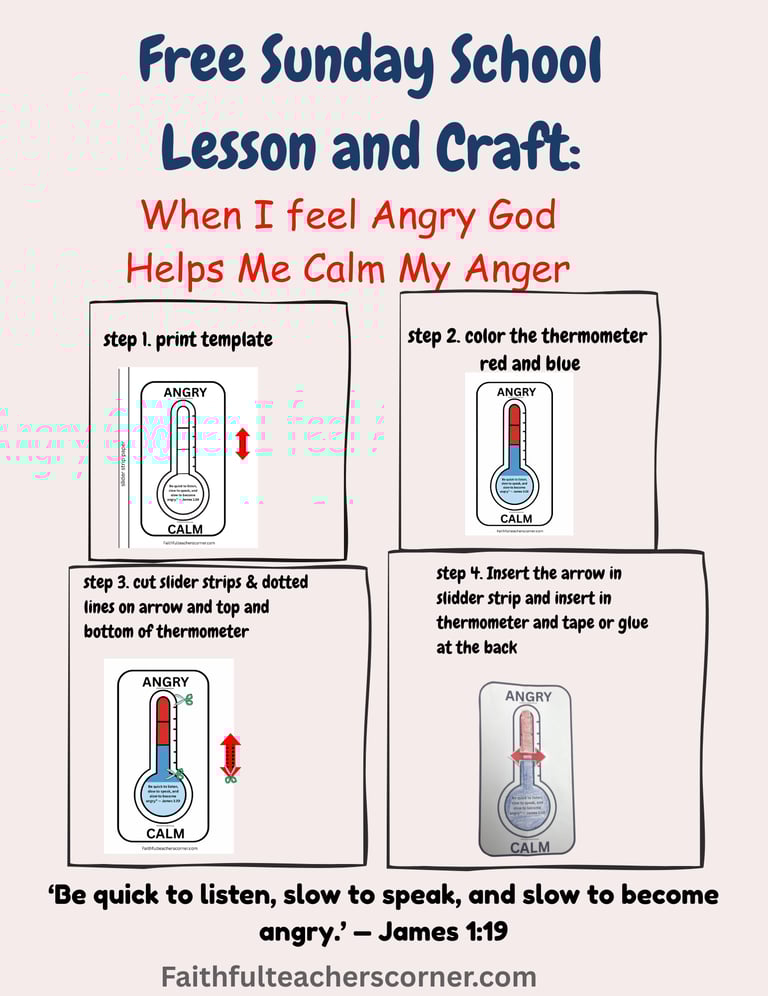
5. Craft — Anger Thermometer Slider (10 minutes)
A perfect visual craft for emotional regulation
Materials:
Printable thermometer template
Paper arrow & slider template
Tape- [AMAZON LINK]
Crayons- [AMAZON LINK]
Markers- [AMAZON LINK]
Scissor- [AMAZON LINK]
glue- [AMAZON LINK]
Craft Connection:
“When I feel my anger rising, I can stop, breathe, and ask God to help me calm down.”
Free Printable Available 👇
6. Memory Verse (With Motions)
Verse:
“Be quick to listen, slow to speak, and slow to become angry.” — James 1:19
Motions:
Quick to listen – Cup hand around ear
Slow to speak – Finger to lips
Slow to become angry – Hands down, deep breath
Repeat together 2–3 times.
7. Weekly Challenge
Challenge for the Week:
“When you feel angry, stop and pray:
‘Jesus, help me be calm.’”
Encourage kids to practice the pause + breathe + pray method at home or school.
8. Closing Prayer
“Dear God, thank You for helping us when we feel angry. Help us listen, speak kindly, and stay calm. Thank You for loving us and guiding our hearts. Amen.”
9. Final Questions & Review
What verse did we learn today?
What should we be quick to do?
What should we be slow to do?
Who can help us calm our anger?
What can we do when we feel angry?
Final Reminder:
God helps me calm my anger and choose love.
Parent Take-Home Note
This week’s lesson teaches children how God helps them control anger using James 1:19. Encourage your child to pause, breathe, and pray when they feel upset. Practicing these steps helps build self-control and kindness.


🧰 Supplies for Today’s Craft!
Using these Amazon links helps support my ministry. Thank you for helping me continue creating free, complete Sunday school lessons for teachers and families!